mirror of
https://github.com/bugsink/bugsink.git
synced 2025-12-18 02:54:55 -06:00
 a4ecd386b6
"In principle" setting `SCRIPT_NAME` is enough. The way we do this is [1] using
`FORCE_SCRIPT_NAME` (which does not depend on messing with reverse proxy
settings and [2] by deducing the correct value from `BASE_URL` (which must be
set anyway) automatically.

By works I mean: `reverse` and `{% url` pick it up from there.

However, there are subtleties / extra work:

* `STATIC_URL` is needed too b/c https://code.djangoproject.com/ticket/34028

* in many pre-existing code I just created a path manually in the html. Such
  hrefs are obviously not magically fixed for script_name. Rather than doing
  the "full rewrite" (into `{% url`) this commit just prepends the
  `script_name` in those cases. That's the way forward that will least likely
  break and it gives us something to grep for if we ever want to 'do it
  right'.

* `LOGIN_REDIRECT_URL` and `LOGIN_URL` needed to use a view-name for this to
  work (using a view-name gets revolved using the thing that introduces
  `script_name`)

Checked, no work needed:

* views (`redirect` and `HttpResponseRedirect`)
* html uses of action="..."

Fix #93
Bugsink: Self-hosted Error Tracking
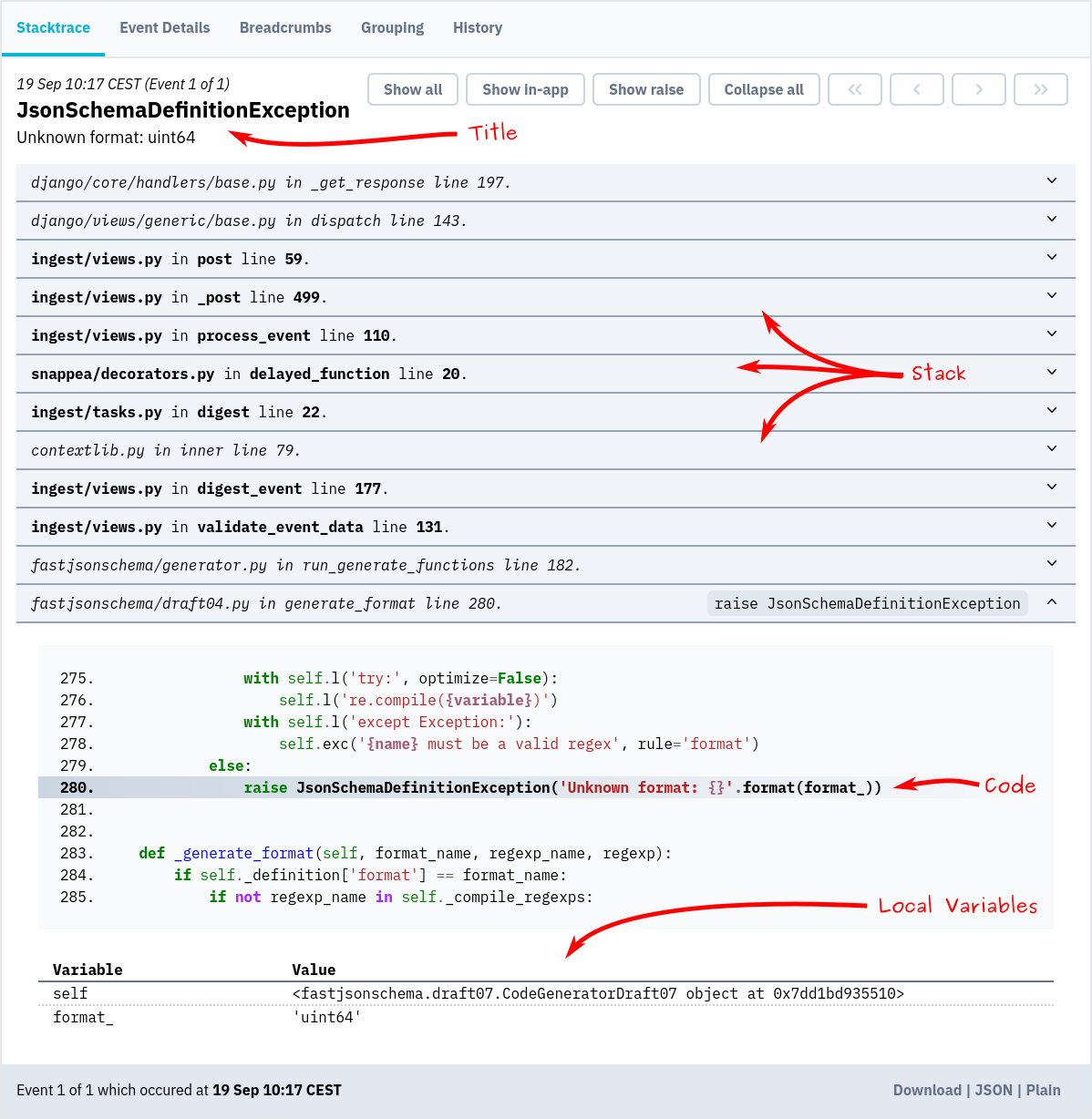
Screenshot
Installation & docs
The quickest way to evaluate Bugsink is to spin up a throw-away instance using Docker:
docker pull bugsink/bugsink:latest

docker run \
  -e SECRET_KEY=PUT_AN_ACTUAL_RANDOM_SECRET_HERE_OF_AT_LEAST_50_CHARS \
  -e CREATE_SUPERUSER=admin:admin \
  -e PORT=8000 \
  -p 8000:8000 \
  bugsink/bugsink
Visit http://localhost:8000/, where you'll see a login screen. The default username and password
are admin.
Now, you can set up your first project and start tracking errors.
Detailed installation instructions are on the Bugsink website.