mirror of
https://github.com/bugsink/bugsink.git
synced 2026-01-06 05:10:15 -06:00
 5bb4dc1f20
Adds a `stacktrace_md` field to EventSerializer and a `/stacktrace` action
returning the same markdown (but as the full response).

Also switches `data` to use `get_parsed_data()` (as it should have) and
in json dict format (rather than str).
Bugsink: Self-hosted Error Tracking
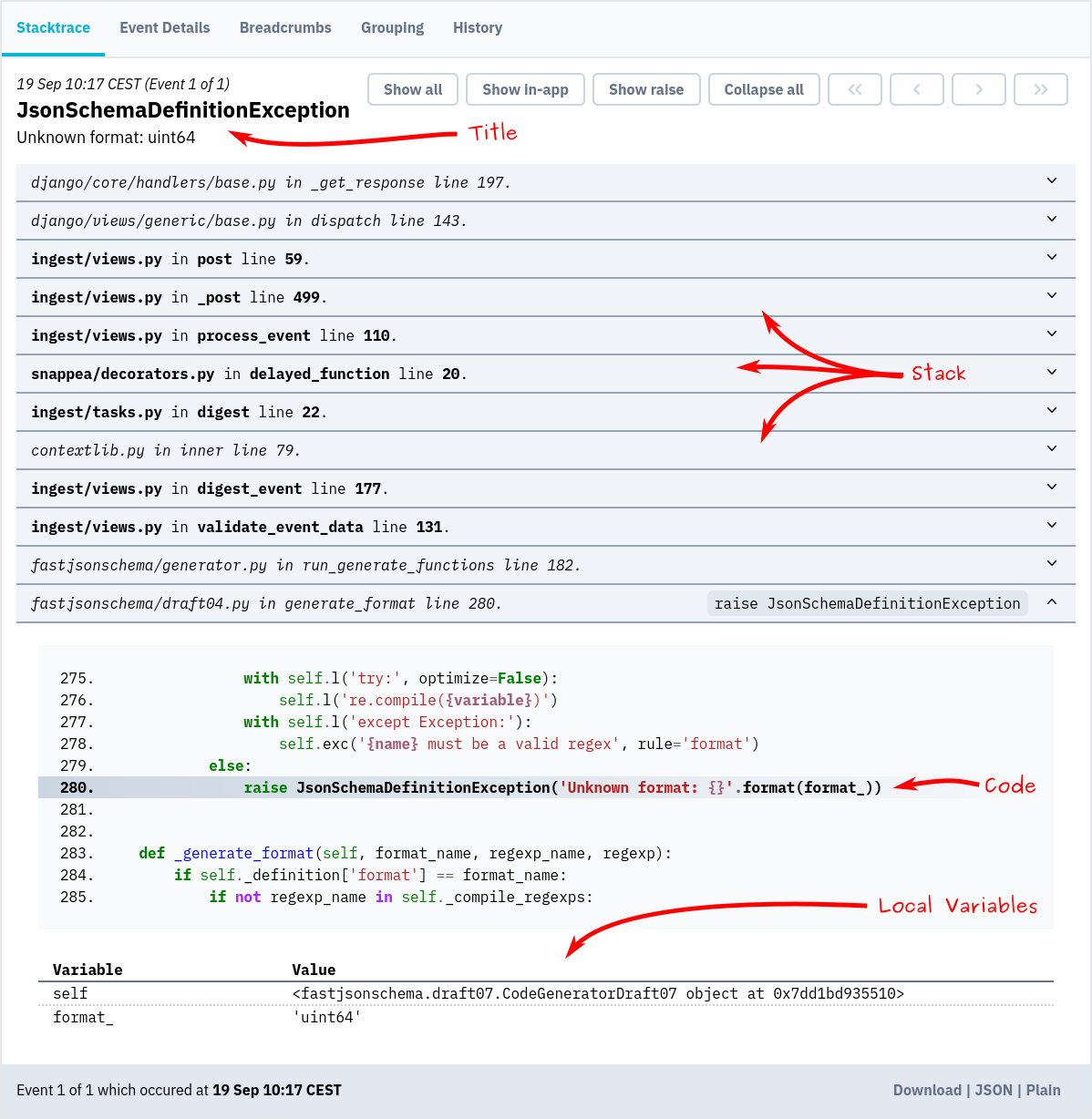
Screenshot
Installation & docs
The quickest way to evaluate Bugsink is to spin up a throw-away instance using Docker:
docker pull bugsink/bugsink:latest

docker run \
  -e SECRET_KEY=PUT_AN_ACTUAL_RANDOM_SECRET_HERE_OF_AT_LEAST_50_CHARS \
  -e CREATE_SUPERUSER=admin:admin \
  -e PORT=8000 \
  -p 8000:8000 \
  bugsink/bugsink
Visit http://localhost:8000/, where you'll see a login screen. The default username and password
are admin.
Now, you can set up your first project and start tracking errors.
Detailed installation instructions are on the Bugsink website.