mirror of
https://github.com/bugsink/bugsink.git
synced 2025-12-20 03:59:53 -06:00
 aa799e9c94
Move DRF/OpenAPI authentication import out of bugsink/__init__.py into
bugsink/authentication.py.

Before: running bugsink-manage imported the bugsink package, whose __init__
pulled in drf_spectacular → DRF → DRF’s api_settings before Django settings
were configured, raising ImproperlyConfigured. (Did not happen in dev where
apps are loaded after settings.)

After: DRF is first touched during server load via urls → routers → views →
schemas. Only then does DRF’s api_settings resolve DEFAULT_AUTHENTICATION_CLASSES,
importing bugsink.authentication at a point where settings are already ready.
Bugsink: Self-hosted Error Tracking
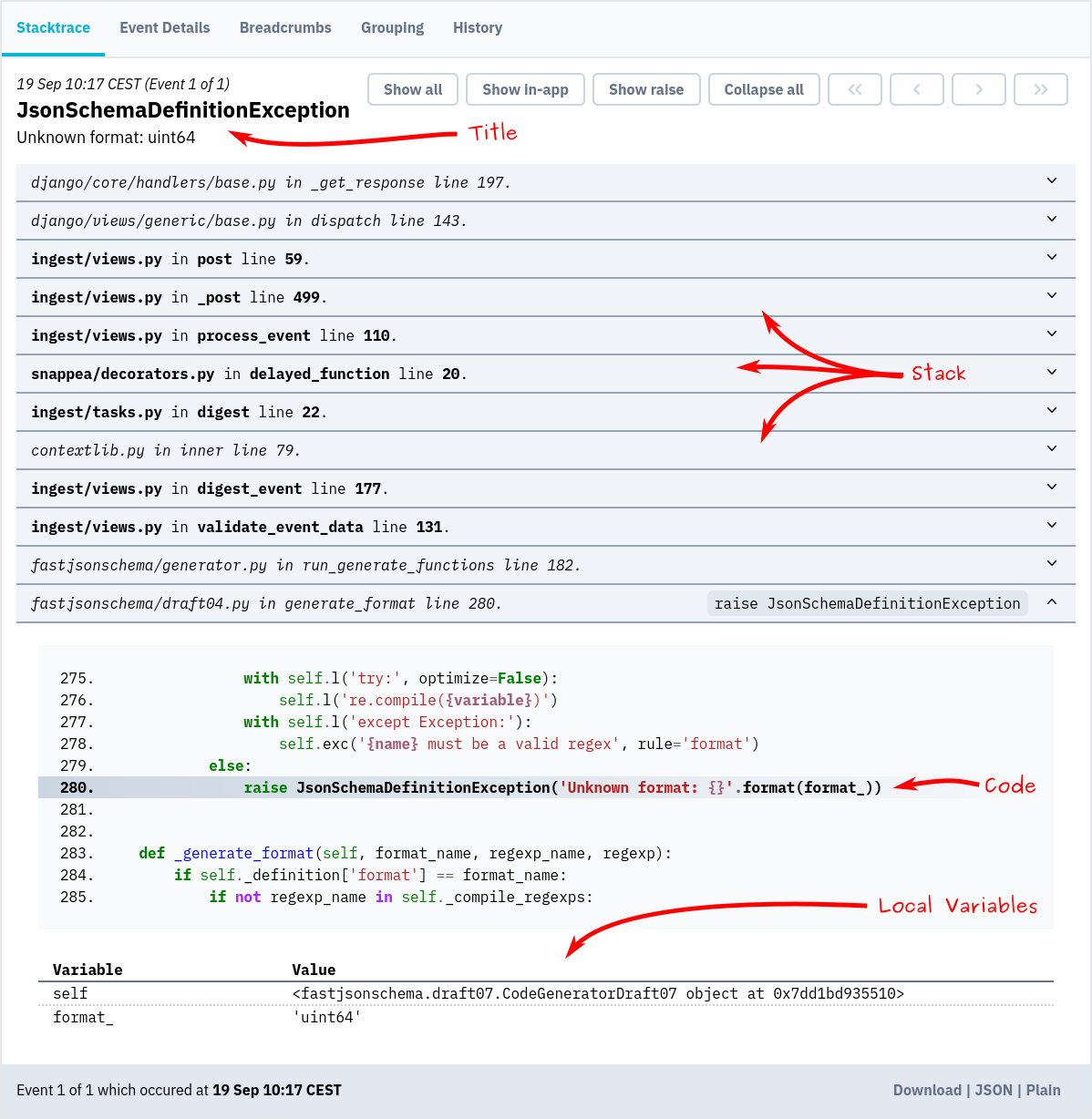
Screenshot
Installation & docs
The quickest way to evaluate Bugsink is to spin up a throw-away instance using Docker:
docker pull bugsink/bugsink:latest

docker run \
  -e SECRET_KEY=PUT_AN_ACTUAL_RANDOM_SECRET_HERE_OF_AT_LEAST_50_CHARS \
  -e CREATE_SUPERUSER=admin:admin \
  -e PORT=8000 \
  -p 8000:8000 \
  bugsink/bugsink
Visit http://localhost:8000/, where you'll see a login screen. The default username and password
are admin.
Now, you can set up your first project and start tracking errors.
Detailed installation instructions are on the Bugsink website.