mirror of
https://github.com/bugsink/bugsink.git
synced 2026-01-07 05:40:26 -06:00
 9135e88495
In 59372aba33 a lazily evaluated BASE_URL tool was introduced.
I found 1 more case in which BASE_URL was not "collapsed into a
string" magically by `__add__`, causing an
`AttributeError: 'TenantBaseURL' object has no attribute 'decode'`
Bugsink: Self-hosted Error Tracking
Bugsink offers Error Tracking for your applications with full control through self-hosting.
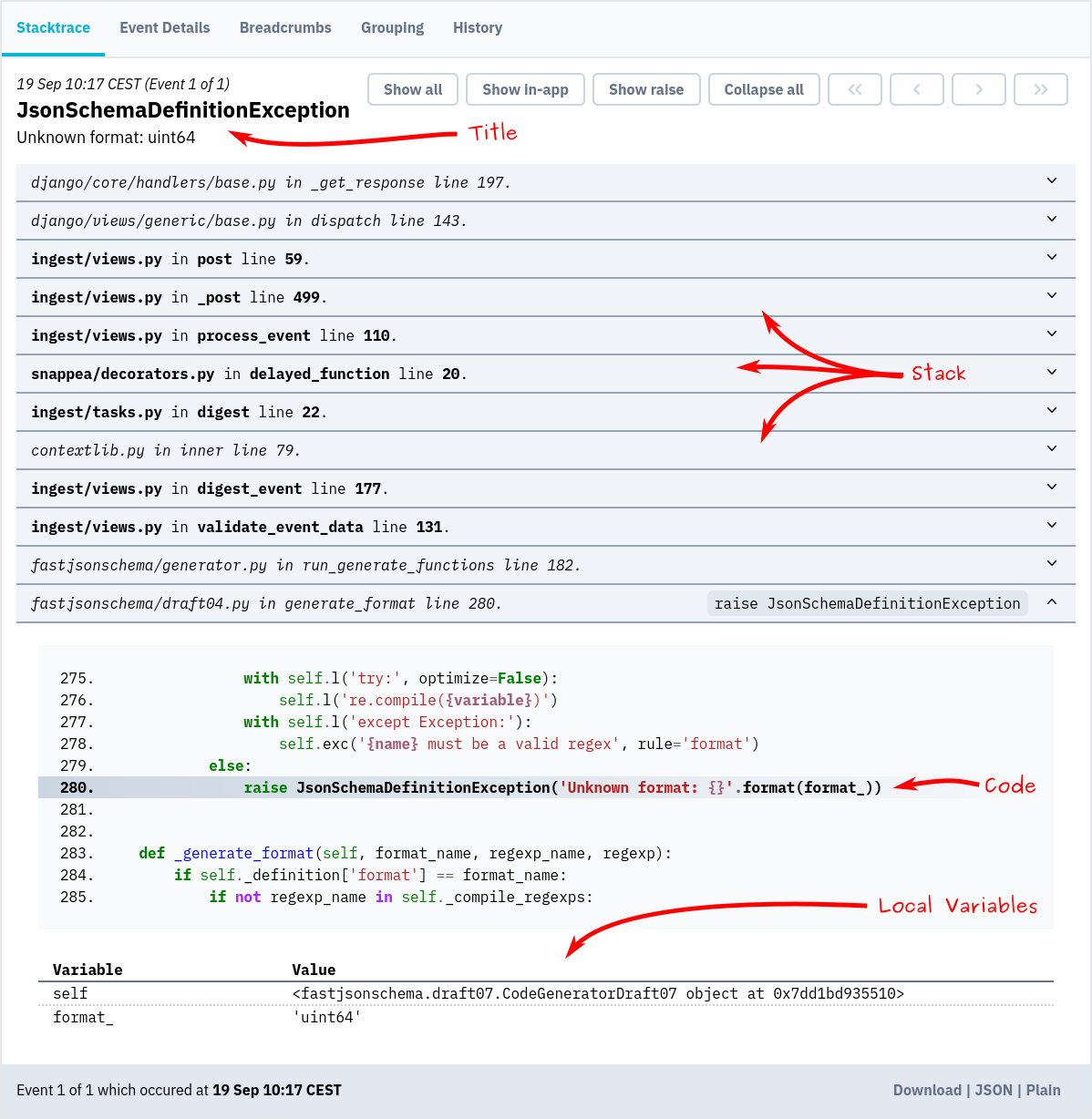
Screenshot
This is what you'll get:
Installation & docs
The quickest way to evaluate Bugsink is to spin up a throw-away instance using Docker:
docker pull bugsink/bugsink:latest

docker run \
  -e SECRET_KEY={{ random_secret }} \
  -e CREATE_SUPERUSER=admin:admin \
  -e PORT=8000 \
  -p 8000:8000 \
  bugsink/bugsink
Visit http://localhost:8000/, where you'll see a login screen. The default username and password
are admin.
Now, you can set up your first project and start tracking errors.
Detailed installation instructions are on the Bugsink website.